
Estimated reading time: 4 minutes
Fuel margins are notoriously volatile, and card swipe fees eat into pennies per gallon. According to the National Association of Convenience Stores (NACS), while roughly 80% of fuel in the U.S. is purchased at convenience stores, fuel accounts for volatile revenue while in-store sales generate the real gross profit margins – with foodservice and packaged goods contributing the lion’s share.
The problem? Most motorists pump gas, tap their card, and leave without ever opening your front door.
Adopting technology doesn’t mean building an autonomous store overnight. It is about using cost-effective digital tools to turn single-transaction pumpers into high-margin inside buyers.
The Reality of Modern C-Store Margins
Data from both NACS and the National Retail Federation (NRF) points to a clear trend: consumers prioritize frictionless experiences, speed, and personalized value.
- Fuel vs. In-Store: Fuel margins often fluctuate around slim cents-per-gallon margins, whereas inside convenience sales regularly carry gross margins of 30% to 50% or higher (especially foodservice and fountain beverages).
- The Conversion Gap: Industry averages consistently show that a majority of forecourt pump customers never enter the store. Converting even 5% to 10% more drivers inside fundamentally transforms store profitability.
Where to Start: 4 Steps That Directly Drive Revenue
1. Upgrade to Contextual Forecourt Media (Pump-to-Store Triggers)
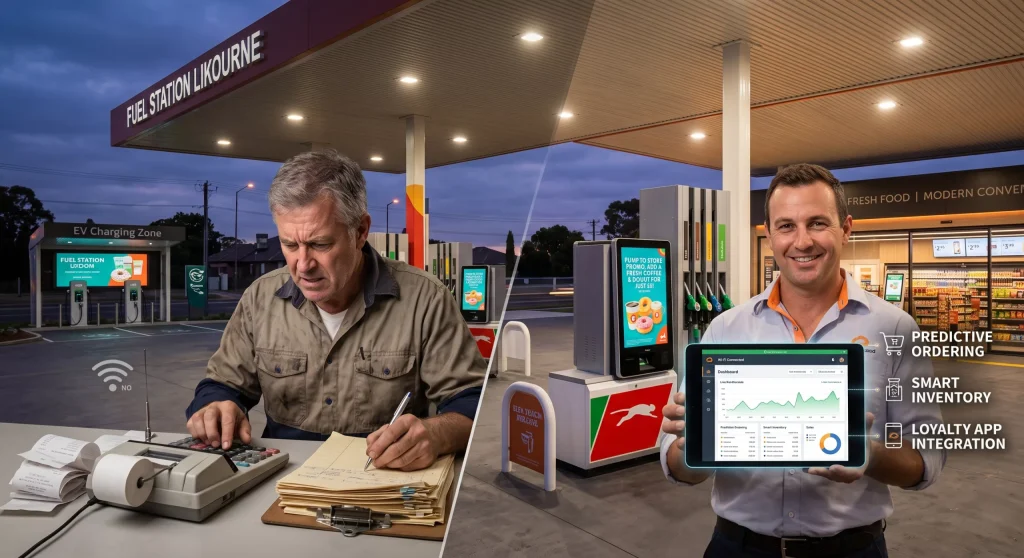
Static pump stickers get ignored. Cloud-connected pump screens and digital displays turn a passive two-minute wait into an active selling window.
- The move: Run limited-time, time-of-day specials (e.g., breakfast combos before 10 AM, cold drinks and salty snacks in the afternoon). Include instant incentives like: “Add a 20 oz drink inside for $1 when you flash this receipt at checkout.”
2. Launch a Frictionless Mobile Loyalty & App Strategy
NRF consumer retail studies highlight that loyalty programs are among the highest-leverage retention drivers in retail. Independent operators no longer need multimillion-dollar custom development; plug-and-play white-label apps now integrate seamlessly into major petroleum POS platforms.
- The move: Offer a small cents-off-per-gallon discount tied directly to an in-store action (e.g., “Save 10¢/gal on your next fill-up when you buy any fresh deli or bakery item”).
3. Install Cash-Integrated or Hybrid Self-Checkout
Labor costs and staffing shortages are top operational headaches for store owners. Long lines at the register cause rushed drivers to skip buying a beverage or snack altogether.
- The move: A compact self-checkout kiosk keeps transactions moving under 30 seconds. Store employees can focus on restocking high-margin impulse displays and keeping the station spotless rather than scanning sodas.
4. Deploy Smarter Inventory & Shrink Analytics
Modern cloud-native back-office software uses predictive algorithms to optimize ordering.
- The move: Automated stock alerts flag fast-moving items before they stock out during peak traffic hours and highlight slow-moving stock tying up working capital.
Comparison of Starter Tech Upgrades
| Technology | Primary Business Goal | Cost & Setup | Payoff Timeline |
| Digital Pump Promos / Forecourt Video | Pull outdoor drivers into the store | Moderate (hardware/display upgrade) | 3 – 6 months |
| White-Label Mobile Loyalty App | Increase visit frequency and customer lifetime value | Low (SaaS monthly subscription) | Immediate to 3 months |
| Self-Checkout Kiosks | Shorten queues and reduce labor dependency | Moderate | 6–12 months |
| Automated Back-Office Analytics | Cut shrink, reduce food waste, optimize ordering | Low to Moderate (cloud POS addon) | 3 – 6 months |
The Big Takeaway for Station Owners
The pump is your acquisition channel; the sales floor is your profit engine.
Never invest in technology just for the sake of looking modern. Any tool you buy must answer one question: Does this give the driver standing at Pump 4 a compelling reason to walk inside and spend $6 before driving away? If it doesn’t solve that transition, spend your money elsewhere.
Frequently Asked Questions (FAQs)
What is the single highest-ROI tech upgrade for a small station?
A turnkey loyalty and text/mobile promotion platform. It requires minimal hardware, launches quickly, and lets you capture customer phone numbers to bring them back during slow midweek hours.
Do I need expensive camera-based ‘grab-and-go’ tech like Amazon Go?
No. High-end autonomous vision systems remain expensive and have lengthy ROI periods for single or small-chain operators. Compact self-checkout kiosks deliver 80% of the speed and labor benefits at a fraction of the cost.
How do NACS benchmarks help me measure tech success?
NACS benchmarks track metrics like inside gross margin, direct store operating expenses (DSOE), and fuel conversion rates. By tracking your average in-store basket size and the percentage of fuel transactions that include an inside purchase, you can directly measure the financial impact of your upgrades.