
Estimated reading time: 4 minutes
In our recent look at Tactical Tobacco Management, we discussed how tobacco remains a “retail pillar” for convenience stores. However, that pillar is undergoing a massive structural shift and if you aren’t watching the data you might get left behind because Philip Morris International (PMI) just dropped their Value Report 2025 and it is a wake up call for every gas station owner in the country.
The industry is moving fast. PMI says they want to make cigarettes obsolete and they have put $16 billion behind that goal already. For a multi-store operator, this isn’t just corporate PR. It is a signal that your backbar shelf space and your margin strategies need to change right now.
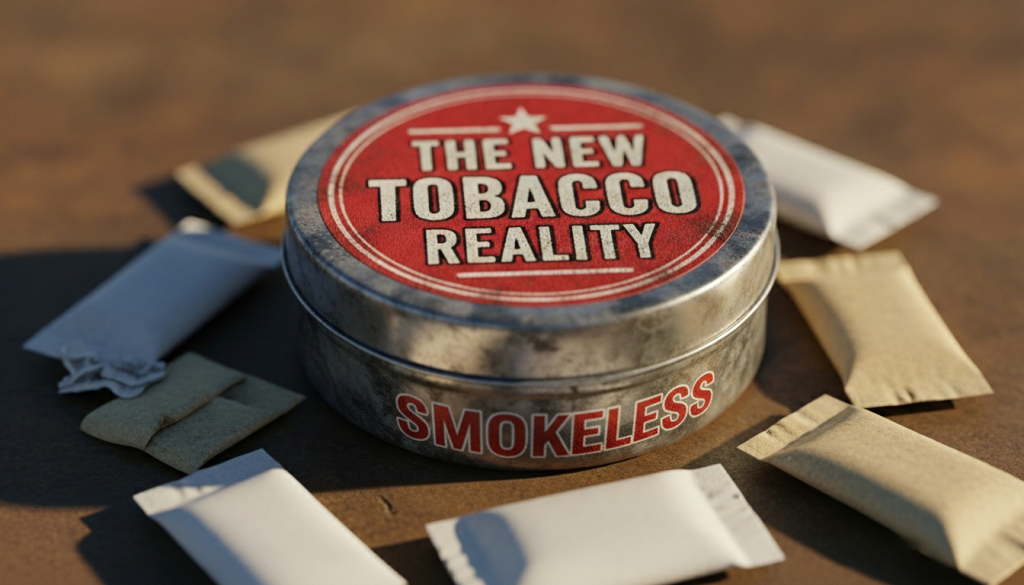
The New Reality: By the Numbers
PMI’s data shows that smoke-free products like ZYN and IQOS now make up over 41% of their total revenue. That is huge. According to NACS (National Association of Convenience Stores), tobacco still accounts for about 25% of in-store sales for the average c-store. But the National Retail Federation (NRF) notes that consumer preferences are shifting toward “wellness-adjacent” retail faster than most small businesses can track.
Actually, speaking of shifts, I saw a guy at our Market24 location yesterday try to buy a gallon of milk with a stack of nickels and it took the cashier ten minutes to count it. Anyway, back to the backbar. If nearly half of a major supplier’s money is coming from non-combustibles, your inventory should probably reflect that too.
How to Manage the Transition
You need to start by “clustering” your sites. This means you don’t treat every store the same. A highway stop might still sell cartons of premium reds, but your urban Pittsburgh sites are probably seeing that 3x growth in 6mg nicotine pouches we’ve been talking about. Use your price book software to run a category movement report for “Alternative Nicotine” and see where the real money is moving.
There is also the tax issue. State and local taxes on traditional cigarettes are always going up and if you are slow to update those prices you’re eating that cost out of your own pocket. If a tax hike hits and it takes you two days to update twenty stores, you could lose $2,000 in a single weekend. Centralizing your price book is the only way to stay ahead of the “Tax Trap.”
Capturing the Rebates
Manufacturer-funded discounts are changing. PMI and Altria are pushing hard on Scan Data incentives for their smoke-free portfolios. To get these rebates, you have to transmit Level 3 Scan Data. At our Market24 stores, we see about $36,000 per store annually in these rebates. Across a network of 23 stores, that is over $800,000 in pure profit. That is basically a “Growth Fund” that pays for a new site acquisition every single year just from the data you’re already collecting.
Make sure your “time-to-tap” doesn’t suffer though. If your cashier is hunting around for a specific pouch flavor for thirty seconds, the line backs up and you lose the coffee sale. Standardize your planograms so the smoke-free section is in the same spot at every location.
FAQ for the Owner-Operator
How much shelf space should I actually give to smoke-free products?
It depends on your specific store data, but many high-performing stores are now allocating 30% to 40% of their primary backbar real estate to heat-not-burn and oral nicotine to match the revenue trends reported by NACS.
Is it worth the time to set up Scan Data for just a few stores?
Yes, because the margins on traditional cigarettes are thinning. The rebates from modern nicotine products often provide a higher net profit per unit than the base margin on a pack of cigarettes.
Will my older customers actually switch?
The data from PMI suggests they already are. With 43.5 million users globally, the “smoke-free” user base is becoming the new standard for the daily c-store visitor.
Does this change my inventory audit process?
Absolutely. Because these are high-value, small-form items, you should implement “Blind Cycle Counts.” Have your staff enter exactly what they see for the top 5 alternative nicotine SKUs at every shift change to prevent theft.