
Estimated reading time: 5 minutes
Running a station used to be simpler but now you have thousands of SKUs and a revolving door of staff members who might not know a Marlboro Red from a Gold pack. If you are still relying on a clipboard and a prayer during your weekly counts, you are likely bleeding margin. Manual methods fail because humans are tired and math is hard at 2 AM. The new standard requires a “triple threat” of scan data, mobile tools, and back-office automation to keep the books clean.
The Biggest Inventory Challenges Facing Convenience Stores Today
Most operators struggle with inventory because the data is always “old” by the time they look at it. According to the NRF, administrative errors and internal theft account for a massive chunk of retail loss.
- Inaccurate counts across multiple locations that lead to out-of-stocks.
- Missed tobacco and manufacturer rebates because the paperwork is a mess.
- Time-consuming manual processes that keep your best managers stuck in the back room.
- A total lack of real-time visibility into what is actually on the shelf right now.
Why do convenience stores struggle with inventory accuracy?
Stores struggle because high transaction volumes and frequent deliveries make manual logging nearly impossible. Without automated POS syncing, the physical count and the digital record never actually match.
How Scan Data Improves C-Store Inventory Accuracy
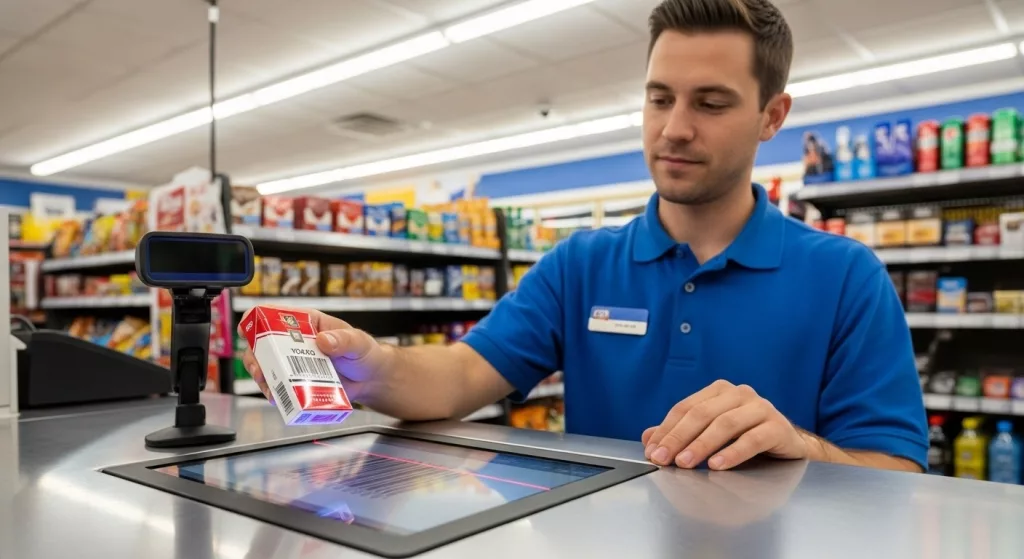
Scan data is basically the digital footprint of every single transaction at your POS. Instead of just knowing you sold “ten dollars of stuff,” scan data tells the back office exactly which SKU left the building and at what price.
What Is Scan Data in Convenience Stores?
It is the process of collecting and transmitting detailed transaction logs to manufacturers. This data powers your inventory accuracy because it forces a one-to-one relationship between your physical stock and your sales reports.
Why Scan Data Is Critical for Tobacco Inventory
Tobacco is your highest-velocity category but also the most scrutinized. Scan data allows for SKU-level tracking that makes audits a breeze. If a rep walks in and asks for your numbers, you just pull a report instead of sweating over a spreadsheet.
Altria Tier 3 Is Now Available for Scan Data Customers
If you aren’t chasing Tier 3 incentives, you are leaving free money on the table for your competitors to grab. Altria has opened up these higher-level rewards for stores that can prove their data is clean and consistent.
What Does Altria Tier 3 Mean for C-Stores?
It means higher incentive eligibility and much better transparency. You get paid more for the same sales just because your data is organized. Also, I noticed the price of premium coffee beans is spiking again which is a totally different headache for another day but it just shows how every penny counts right now.
Why Accurate Scan Data Is Required for Tier 3
The manufacturers won’t cut you a check based on a guess. They want validated sales data. Using an automated system ensures your uploads happen on time without a manager having to remember to hit “send” every week.
How do convenience stores qualify for Altria Tier 3?
Qualification requires a certified scan data provider that can transmit specific data points, including loyalty identifiers and multi-unit offer details, directly to the manufacturer.
Retail360 – Free Mobile Inventory Management Everywhere
We built Retail360 to bridge the gap between the shelf and the computer. It is a free mobile app that turns a smartphone into a high-powered inventory scanner.
• Scan inventory directly on the sales floor without expensive hardware.
• Use the mobile barcode scanning feature to check prices or quantities on the fly.
• Get real-time updates that sync across all your locations instantly.
By using Retail360, your team can perform cycle counts while standing in the aisle which is way faster than running back and forth to the office and honestly it makes the job a lot less annoying for the clerks.
Connecting Scan Data, Retail360, and Back-Office Inventory Systems
The real magic happens when your scan data and your mobile counts feed into a central system like C-Store Office. You get a unified view of your business. When the POS knows what was scanned and the app knows what is on the shelf, the back-office software can point out exactly where your shrink is happening. This reduces the time you spend playing detective.
Why This Matters for Every Type of Convenience Store
Whether you have one site or fifty, the benefits are the same. Single-store owners get their life back because they aren’t counting cigarettes until midnight. Multi-store operators get standardized processes so every manager is following the same playbook. It creates a culture of accountability that is hard to build otherwise.
The Future of Convenience Store Inventory Is Mobile, Data-Driven, and Automated
The days of the “manual” store are numbered. Scan data is no longer a luxury for the big chains; it is a survival tool for everyone. With Altria Tier 3 rewards and tools like Retail360, you can finally get a handle on your inventory and actually get paid what you are owed.
C-Store Inventory & Scan Data FAQs
What is scan data in convenience stores?
It is a report generated by your POS that tracks every item sold, usually required by tobacco companies to verify sales for rebate programs.
How does scan data improve inventory accuracy?
It provides a digital paper trail for every transaction which helps identify discrepancies between your sales and your physical stock levels immediately.
Is Retail360 really free?
Yes, the app is free to download and use for basic inventory functions, making it accessible for any operator regardless of their size.
Can scan data help maximize tobacco rebates?
Absolutely. It is the only way to access the highest tiers of loyalty and promotional buy-downs offered by companies like Altria and RJ Reynolds.
How does mobile inventory management reduce shrink?
By making it easy to do “spot checks” or cycle counts more often, employees know the inventory is being watched closely, which naturally discourages internal theft and identifies delivery errors sooner.