
Estimated reading time: 5 minutes
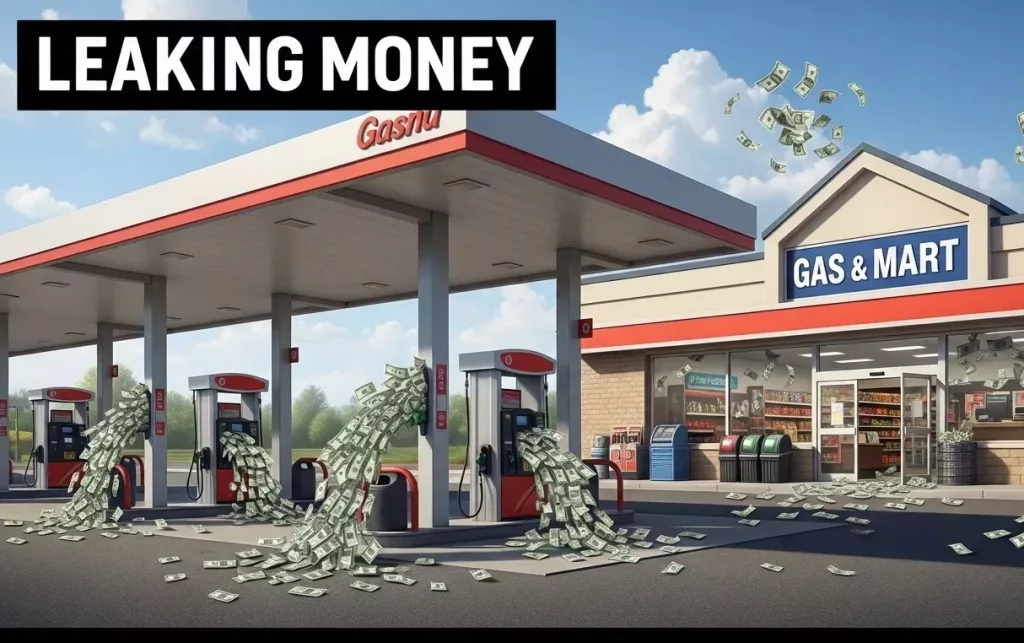
If you own a gas station or convenience store, you’re likely losing money every single day and you may not even know it. Most owners focus on the price of fuel at the pump because that is what the big sign shows but the real “silent profit leaks” are happening inside the store.
According to NACS, the convenience industry saw inside sales reach record highs recently, yet margins are tighter than ever because of rising labor costs and inventory mismanagement. If your losses aren’t coming from fuel margins, they are coming from outdated systems and manual processes that eat your time and cash.
The 5 Silent Profit Leaks Killing Your Margins
1. Inventory Shrink and Manual Counts
Shrinkage is a massive headache for any retail business. The National Retail Federation (NRF) reported that retail shrink is a nearly $100 billion problem. In a c-store, this comes from employee theft, vendor discrepancies, or just items spoiling on the shelf. If you are still doing inventory with a clipboard and a pen, you are basically guessing. Moving to a mobile inventory management system like Retail360 changes the game because it provides real-time tracking that catches “disappearing” snacks before they ruin your month.
2. Outdated POS Systems
A slow POS system does more than just annoy customers waiting in line. Legacy systems often lack real-time reporting or poor fuel integration which makes it impossible to see your true daily position. Modern gas station POS systems, like SmartPOS, provide integrated fuel and inside sales data so you see exactly what is happening at every pump and register simultaneously.
3. Missed Tobacco and Scan Data Rebates
This is essentially free money that many operators just leave on the table. Major tobacco manufacturers offer huge rebates, but you have to submit “scan data” correctly to get them. I once knew a guy who collected vintage stamps and he said the key was the details, which is just like these rebates. If your reporting is incorrect or manual, you lose those credits.
4. Invoice Processing Errors
Every time an employee manually enters a vendor invoice, there is a chance for a typo. Vendor overbilling happens more often than you think, and without automated invoice validation, you are likely overpaying. Every invoice entered manually is a chance to lose money and waste hours of back-office time that could be spent growing the business.
5. Lack of Loss Prevention Visibility
Shrink isn’t random; it’s actually quite predictable when you have transaction-level analytics. Without exception reporting, you won’t notice if a specific cashier is processing an unusual amount of “voids” or “no sales” during the night shift.
What Profitable Gas Stations Do Differently
The most successful operators I see aren’t necessarily working more hours than you are. Instead, they focus on eliminating blind spots through technology. They use integrated back-office software and automated invoice processing to ensure every penny is accounted for. It is about having a centralized dashboard where you can see all your locations at once without having to drive to each one.
The Technology Stack That Stops the Leaks
- SmartPOS: This handles faster checkouts and provides the real-time reporting needed to keep the lines moving and the data accurate.
- C-Store Office: This is the brain of the operation for back-office control, offering sales analytics and exception reporting to find where the money is going.
- Retail360: A mobile app for handheld scanning that makes inventory counts and lottery tracking fast and accurate.
- DPS (Direct Processing Services): This automates your invoice processing so vendor reconciliation happens in minutes instead of days.
- Scan Data Tobacco Rebates: Ensures you maximize manufacturer incentives by submitting accurate data every time.
Quick Self-Assessment
Ask yourself these questions honestly: Are you manually entering invoices? Are your inventory counts still done on paper? Do you know your exact shrink percentage for the last 30 days? Can you view your multi-store data on your phone right now?
If you answered “No” to more than two of those, your store is leaking profit. Doing nothing about it is a choice, but it is an expensive one. Shrink compounds, labor inefficiency grows, and missed rebates add up to thousands of dollars lost every single year.
Frequently Asked Questions
What causes profit loss in gas stations?
Most loss occurs through “silent leaks” like inventory shrink, administrative errors in invoice entry, and failing to claim manufacturer rebates. While fuel margins are thin, the lack of visibility into inside-store operations often results in thousands of dollars in preventable losses each month.
How can a POS system reduce shrink?
A modern POS system tracks every transaction at a granular level. By using exception reporting, owners can identify suspicious patterns such as excessive voids or returns. Integrated systems also ensure that fuel sales and C-store inventory are reconciled automatically, leaving less room for employee theft or error.
What is scan data in convenience stores?
Scan data is the digital record of every item sold, specifically required by tobacco manufacturers like Altria and RJ Reynolds. By submitting this data electronically, store owners earn per-unit rebates and can offer loyalty discounts that make their store more competitive without hurting their own margins.
How do gas stations track tobacco rebates?
Profitable stations use automated software that formats and sends transaction data directly to manufacturers. This eliminates the errors associated with manual tracking and ensures the owner receives the maximum possible rebate amount for every pack or carton sold.
What software do profitable c-stores use?
High-performing stores typically use an integrated ecosystem like Petrosoft’s C-Store Office for back-office management, SmartPOS for transactions, and DPS for automated invoice processing. This “tech stack” allows for real-time visibility and significantly reduces the time spent on manual data entry.