
Estimated reading time: 6 minutes
The margin on a gallon of gas has never been thinner. Fuel drives traffic, but the real money is inside the building — and right now, nothing inside offers more profit potential than prepared food and quick-service restaurant (QSR) programs.
According to NACS, foodservice accounts for roughly 23% of in-store sales industry-wide and keeps climbing. Chains like Wawa, Sheetz, and Casey’s have built entire brand identities around food. Independent operators can absolutely compete — with the right systems in place.
The Opportunity
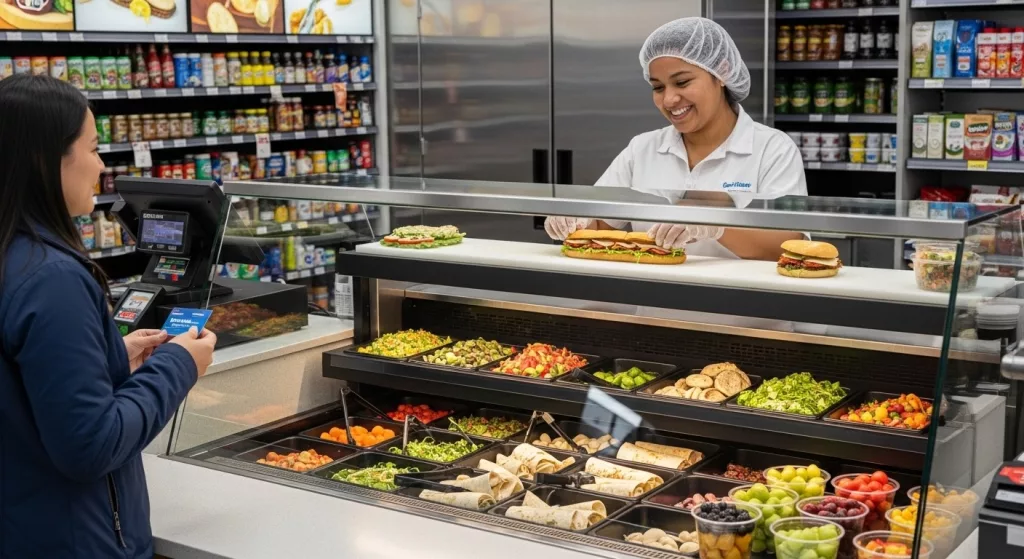
Today’s convenience shopper wants fresh made-to-order sandwiches, hot breakfast all day, pizza by the slice, and grab-and-go options. The modern c-store competes directly with fast food — and often wins on convenience and price.
The margin story is compelling: prepared food typically carries 50–70% gross margins versus 3–5% on fuel. Food customers spend 2–3x more per visit and come back more often. Breakfast and lunch dayparts remain chronically underserved at most locations.
The Investment: What It Really Costs
Launching a food program is a real capital commitment — but it’s financeable, and the ROI timeline is well-documented.
Equipment & Kitchen Infrastructure — $30,000–$125,000+ Hot cases, fryers, griddles, refrigeration, and a ventilation hood with fire suppression system. Cost scales directly with menu complexity.
Store Remodel & Layout — $15,000–$75,000 Dedicated prep space, display cases, updated counters, and proper flooring.
Staffing Budget for 1–3 additional FTEs. Target labor at 28–35% of food revenue. All food handlers need certification; at least one Certified Food Protection Manager (CFPM/ServSafe) is required in most states.
Opening Inventory — $2,000–$10,000 Target ongoing food cost at 28–35% of food revenue. Build spoilage and waste into your model from day one.
Technology & POS Your existing c-store POS likely wasn’t built for food. This is where investing in the right system pays for itself many times over. (More below.)
Marketing & Signage — $2,000–$15,000 Exterior signage, digital menu boards, and local marketing. Customers won’t know you have food unless you tell them.
Realistic Total Launch Investment: $60,000–$250,000+ A simple hot-hold program sits at the lower end; a full made-to-order kitchen at the higher end. SBA loans, equipment leasing, and distributor financing are all common funding paths.
Compliance & Permitting: Don’t Skip This Step
Selling prepared food is a regulatory commitment. Requirements vary by state, county, and municipality — but here’s what most operators will face:
- Food Service Establishment License — Required in virtually every jurisdiction, separate from your business or fuel license. Annual renewal fees range from $100–$1,000+.
- Health Department Inspections — Routine and unannounced. Inspectors evaluate temperatures, hygiene, cross-contamination, sanitation, and pest control. Failing means fines or closure.
- Food Handler & Manager Certifications — Most states require at least one certified Food Protection Manager on staff. Budget for training and build re-certification into your HR calendar.
- Building & Fire Permits — Adding cooking equipment triggers building permits, fire marshal inspections, and hood/suppression system approvals. Use a licensed contractor with food service experience and pull every required permit.
- Zoning — Some jurisdictions require a variance or conditional use permit if your property was originally permitted only as a fuel retailer. Check early.
- Sales Tax on Food — Rules vary widely by state. Hot prepared food is taxable in most states; cold grocery items often are not. Your POS must be configured correctly by item category.
Action Item: Contact your local health department and building department before purchasing any equipment. A 30-minute conversation can save you from costly surprises.
When Can You Expect ROI?
This is the question every owner-operator should model before committing. The math is more favorable than many expect — especially when food is layered on top of an existing customer base you’re already paying to attract.
A Realistic Scenario
| Conservative | Moderate | Strong | |
| Daily food transactions | 40 | 75 | 120 |
| Average ticket | $6.50 | $7.50 | $8.50 |
| Daily food revenue | $260 | $563 | $1,020 |
| Monthly food revenue | ~$7,800 | ~$16,875 | ~$30,600 |
| Gross margin (60%) | ~$4,680 | ~$10,125 | ~$18,360 |
| Labor & overhead (35%) | ~$2,730 | ~$5,906 | ~$10,710 |
| Monthly net contribution | ~$1,950 | ~$4,219 | ~$7,650 |
ROI Timeline by Investment Level
Entry-Level Program (~$75,000 investment) At a moderate volume, monthly net contribution of ~$4,200 returns your investment in approximately 18 months. Conservative volume pushes that to 36–40 months.
Mid-Range Program (~$150,000 investment) Strong volume at $7,650/month net returns capital in approximately 20 months. Moderate volume takes closer to 36 months — still a solid return on a long-lived asset.
What accelerates ROI:
- Tight food cost management (every 1% improvement adds ~$170/month at moderate volume)
- Reducing waste through accurate prep forecasting
- Building a loyalty or frequency program tied to food purchases
- Strong breakfast daypart — the highest-margin, lowest-competition window for most c-stores
What kills ROI:
- Uncontrolled spoilage and waste
- Overstaffing before volume justifies it
- Poor technology leading to shrinkage and miscounted inventory
- Underpricing menu items out of fear of customer resistance
Rule of thumb: A well-run food program at a mid-volume c-store should return its full investment within 18–30 months and contribute meaningfully to store profitability indefinitely after that. The asset base (equipment, remodel) has a 10–15 year useful life.
Technology: The Engine That Makes It Profitable
Many c-store operators who add food service struggle — not because the concept is wrong, but because they try to manage it with systems built for tobacco and beverages. Prepared food requires real-time inventory visibility, recipe costing, waste tracking, and order management that traditional c-store POS systems weren’t designed to handle.
Petrosoft Quick Serve
Petrosoft Quick Serve is purpose-built for convenience store operators running a food service program. Integrated directly into the Petrosoft platform — the same system powering your fuel management, back office, and c-store POS — it gives you:
- Order Management — Fast, accurate processing of made-to-order items, modifiers, and combos with a kitchen-friendly interface
- Recipe & Menu Costing — Build items with real ingredient costs so you always know your true food cost percentage
- Ingredient-Level Inventory — Track consumption, flag waste, and tighten ordering cycles automatically
- Unified Back Office — Food data flows directly into your existing Petrosoft reporting — fuel, store, and food in one dashboard
- Correct Tax Configuration — Item-level tax rules applied automatically, keeping you compliant across categories
- Daypart & Item Analytics — Know exactly which items are most profitable, which are wasted most, and where to adjust
Petrosoft Quick Serve eliminates the #1 reason food programs fail at c-stores: lack of visibility. When you can see what’s selling, what it costs, and where the waste is, you can manage your way to strong, predictable margins.
The Bottom Line
The shift toward food service in the c-store industry isn’t a trend — it’s a structural change. The operators who win long-term will be those who give customers a reason to come inside.
The investment is real. The compliance requirements are serious. But with a well-run food program, your investment returns in under 30 months — and the margins, customer loyalty, and competitive differentiation compound from there.
Petrosoft Quick Serve gives independent and regional operators the operational visibility that major chains rely on — without the enterprise price tag. If you’re ready to turn your c-store into a food destination, it’s the technology foundation that makes it work.
Ready to explore Petrosoft Quick Serve for your location? Visit petrosoft.com or contact the Petrosoft team to schedule a demo.
Permitting and regulatory requirements vary by jurisdiction. Consult local authorities and qualified professionals before beginning a food service build-out.