
Estimated reading time: 5 minutes
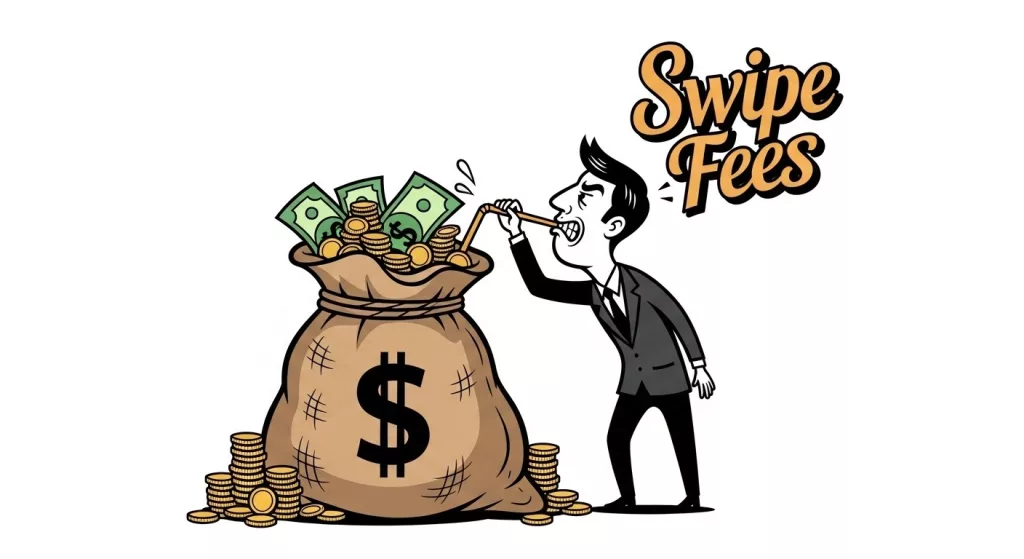
If you spent any time looking at your merchant statements lately, you probably noticed that swipe fees have become a runaway train. For most of us in the fuel business, these fees are the second-largest operating expense right after labor. It is a tough pill to swallow when you realize you are paying a percentage of the state and federal taxes you collect for the government back to the credit card companies.
The National Retail Federation (NRF) notes that swipe fees for most merchants have more than doubled over the last decade, and for a high-volume, low-margin business like a gas station, that is the difference between a profitable month and just breaking even. Recently, Illinois decided to take a swing at this problem with the Interchange Fee Prohibition Act (IFPA). This law basically says that banks cannot charge swipe fees on the portion of a transaction that covers sales tax or customer tips. It is a massive deal because, if it sticks, it changes the math for every store in the country.
The Federal Landscape and the Durbin Amendment Gap
Right now, we live in a bit of a split reality. We have the Durbin Amendment from 2010 which caps what big banks can charge for debit swipes, but credit cards are still the Wild West. There is no federal cap on credit interchange, which is why your “effective rate” probably looks a lot higher than you would like.
By the way, I saw a report the other day about how EV charging stations are being integrated into old service bays, which is a whole other beast for another day, but it shows how much the lot is changing. Anyway, back to the fees. Because Congress has been slow to move on the *Credit Card Competition Act*, states are starting to get restless. They see small businesses struggling and figure they can step in where the federal government hasn’t.
Illinois: The First Domino in State-Level Swipe Fee Reform?
The Illinois law is currently the biggest lightning rod in the industry. It’s the first state to actually pass a law that says you can’t charge a fee on a tax. It makes sense on paper. Why should a bank profit from a tax the retailer is legally required to collect?
A federal district court recently allowed this to move forward, even though the big banks are fighting it tooth and nail. They claim it is too hard to implement technically. But for a store owner, the technical “difficulty” for a bank is secondary to the actual dollars leaving your bank account every night. While Illinois is the only one with an active law, states like Florida, Texas, and New York are watching closely. If Illinois wins the legal battle, expect a wave of similar bills across the country.
Why Swipe Fees Hit Fuel Retailers Harder Than Other Businesses
The NACS State of the Industry report shows that fuel margins are often razor-thin, sometimes as low as a few cents per gallon after all the bills are paid. When gas prices go up, your swipe fees go up too because they are percentage-based. If gas hits $4.00, you’re paying more in fees than when it was $3.00, even though you aren’t making a single extra penny in profit. In fact, you might be making less because people tend to buy less inside the store when the pump hurts their wallet.
This is why “tax-inclusive” pricing is such a trap for us. When a customer swipes for $50 of mid-grade, a chunk of that is pure tax. Paying 2.5% on that tax portion is essentially a “tax on a tax” that the retailer has to eat.
Protecting Gas Station Margins with Petrosoft Solutions
Waiting for the courts to fix swipe fees is a long game. You have to run your business today. The best way to fight back is through sheer visibility. You can’t manage what you don’t measure, and most operators are surprised when they actually see the breakdown of their cash versus credit volume.
Using tools like C-Store Office allows you to see your true margins in real-time. If you know exactly what your “blended” fee rate is, you can price your fuel and indoor items more effectively. It is about taking the guesswork out of the equation. You also need to look at your tobacco rebates and inventory shrink. If you’re losing 2% to swipe fees and another 2% to shrink, your bottom line is vanishing.
SmartPOS and Retail360 are designed to give you that “eye in the sky” view. Whether it is tracking fuel margins or ensuring your price book is accurate so you aren’t losing money on a botched promotion, data is your only real defense against rising costs. Automation doesn’t have to be a scary word. It just means you have a system that catches the errors you’re too busy to find.
FAQ: Common Questions from Gas Station Owner-Operators
Will the Illinois law actually lower my monthly bill?
If you are in Illinois, yes, eventually. However, card networks might try to raise base rates to make up the difference. That is why tracking your “effective rate” is so important.
Should I start charging a credit card surcharge?
It is a popular move, but be careful. NACS data shows that customers at gas stations are very price-sensitive. A surcharge can drive them to the competitor across the street who doesn’t have one. A “cash discount” is usually received better by the public.
Is there any federal help coming?
The Credit Card Competition Act is the main hope. It would force more competition among networks, which theoretically lowers fees. Both the NRF and NACS are lobbying hard for it.
How does Petrosoft help if the laws don’t change?
We focus on the variables you can control. We help you cut labor hours through automated reconciliation and find “hidden” money in your inventory and fuel margins.