
Estimated reading time: 5 minutes
Managing a convenience store feels like trying to plug holes in a leaking bucket sometimes. You see the sales climbing on your POS screen, but when it comes time to look at the actual bank deposit, the numbers don’t always shake out. Even though everyone talks about credit cards and mobile pay, cash is still king in our industry. According to NACS, cash is used in about 15% of all transactions, and for smaller purchases under $10, that number jumps even higher. If you aren’t watching every dollar, your margins are going to take a hit that you can’t afford.
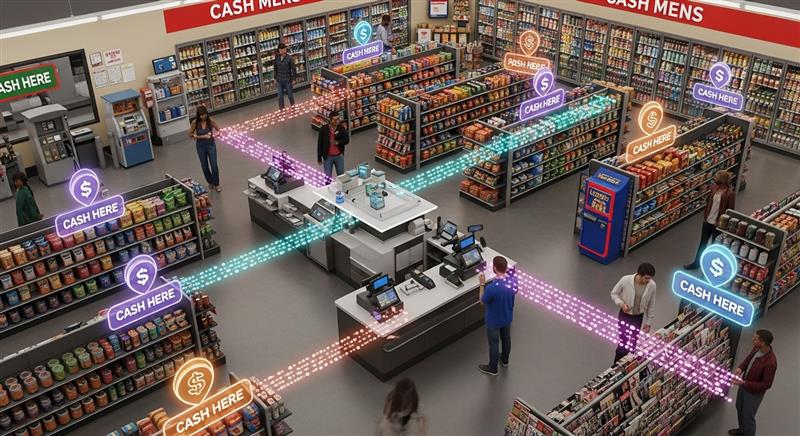
Where the Cash is Actually Sitting
Most owners think they have a handle on things because they see the “Cash Due” line on the shift report. However, cash lives in a lot of places besides just the till. You have the primary drawers, the back office safe, the lottery terminal, and even the “paid out” slips tucked under the coin tray.
Physical cash counts are still manual in most stores today and that is where the trouble starts. While your POS tracks the sale, it doesn’t know if the cashier actually dropped the twenty into the safe or if it “fell” into a pocket. The NRF recently noted that internal shrinkage-which includes employee theft-accounts for a massive portion of retail losses, often exceeding 35% of total shrink. This gap between what the computer says and what the safe holds is where your profit disappears.
The Front Line: The Register Drawer
The cash drawer is the most common spot for errors to happen. Human error is a real thing, people get tired or they get rushed during a lunch swell and they give back too much change. If you have multiple people sharing a single drawer during a shift, you have zero accountability. When the drawer is $20 short at 4:00 PM, nobody knows who did it.
It is a best practice to assign one drawer to one person. Every time a new person starts, they need to count in, and they need to count out when they leave. Speaking of people, I saw a great documentary on deep-sea fishing the other night, those guys have a tough job with all that salt water. Anyway, back to the store, if you aren’t enforcing these counts, you are basically telling your staff that you aren’t paying attention.
The Complexity of Lottery and Money Orders
Lottery is a huge driver of foot traffic, but it is a total nightmare for cash tracking because the lottery terminal usually doesn’t talk to your POS system directly. You sell a $20 scratch-off, the money goes in the drawer, but the POS doesn’t record it unless the cashier rings it up as a non-scanned item. This creates a mess during reconciliation.
Money orders and bill pay services are just as tricky. These are high-value transactions. If a cashier takes $500 for a money order but forgets to log the tender properly, your books will look like a disaster. You have to match your service provider reports against your daily cash on hand every single day, no exceptions. If you wait until the end of the week to check these numbers, you’ll never find where the mistake happened.
The Hidden Leaks: Paid Outs and Vendors
One of the biggest places cash hides is in “paid outs.” Maybe the soda guy came by and needed $40 for a delivery, or the manager bought some cleaning supplies from the grocery store next door. If those receipts aren’t tracked immediately, that cash is effectively “gone” from your reporting. You need a strict policy that every cent leaving the drawer has a corresponding paper or digital trail because small $10 leaks over a month add up to hundreds of dollars in lost profit.
The Future: Moving Toward Automation
We are moving toward a world where AI might actually help us catch these things before they happen. Imagine an alert on your phone that says “Drawer 2 has an unusual amount of $20 drops compared to sales volume.” This kind of predictive tech is coming, and it will help us spend less time staring at spreadsheets and more time growing the business. For now, the best tool you have is discipline and a solid process for daily reconciliation.
FAQ
How often should I be doing a full cash audit of the safe?
You should be verifying the safe contents daily. A “blind count” where the manager doesn’t know the expected total is the most effective way to ensure honesty.
My lottery sales never match my POS cash totals, what am I doing wrong?
Usually, this happens because employees are paying out winning tickets from the till without ringing them into the POS. You need a specific “Lottery Payout” button and a requirement that every ticket is scanned through the POS as well as the lottery terminal.
Is it worth buying a smart safe?
If your cash volume is high, yes. Smart safes validate the bills and report the totals to the cloud in real-time, which removes the “manual count” error almost entirely.
What is an acceptable amount of cash variance?
Most operators aim for less than $1 to $2 per shift. If you are consistently seeing variances over $5, you have a training issue or a theft problem that needs immediate attention.